Core Web Vitals in 2026: What WordPress Site Owners Need to Know
The Evolution of Core Web Vitals
When Google introduced Core Web Vitals in 2020, it was a wake-up call for the web development community. For the first time, user experience metrics directly influenced search rankings. Six years later, these metrics remain central to Google's ranking algorithm, and the standards have only gotten stricter.
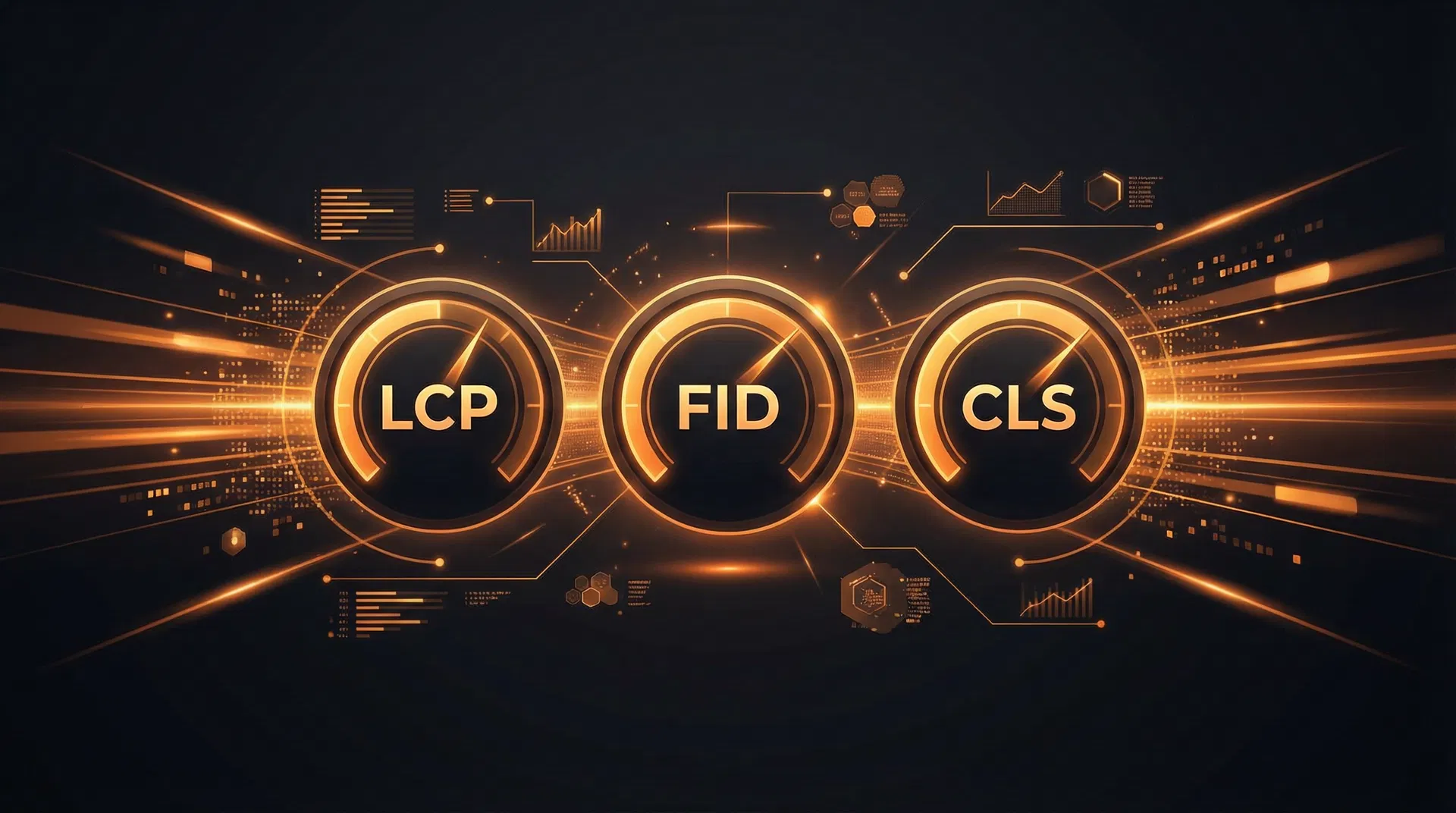
The Three Metrics That Matter
Largest Contentful Paint (LCP)
LCP measures how long it takes for the largest visible element to render. In 2026, the thresholds remain:
- Good: Under 2.5 seconds
- Needs Improvement: 2.5-4.0 seconds
- Poor: Over 4.0 seconds
For WordPress sites, the biggest LCP killers are:
- Unoptimized hero images - Large images without proper sizing, format (use WebP or AVIF), or lazy loading
- Render-blocking resources - CSS and JavaScript that prevent the browser from painting
- Slow server response times - Cheap shared hosting with slow TTFB (Time to First Byte)
- Third-party scripts - Analytics, ads, and chat widgets that compete for bandwidth
Interaction to Next Paint (INP)
INP replaced First Input Delay (FID) in March 2024 and measures the responsiveness of your site to user interactions. Every click, tap, and keypress is measured, and the worst interaction determines your INP score.
- Good: Under 200 milliseconds
- Needs Improvement: 200-500 milliseconds
- Poor: Over 500 milliseconds
WordPress sites struggle with INP because of:
- Heavy JavaScript plugins - Page builders, sliders, and animation libraries that block the main thread
- Synchronous event handlers - Click handlers that perform expensive operations before yielding
- Layout thrashing - JavaScript that reads and writes DOM properties in a loop
Cumulative Layout Shift (CLS)
CLS measures unexpected layout movement. The thresholds:
- Good: Under 0.1
- Needs Improvement: 0.1-0.25
- Poor: Over 0.25
This is where Sera CLS Guard shines. The most common CLS sources on WordPress sites are ad containers, images without dimensions, and dynamically injected content.
WordPress-Specific Strategies
For LCP
- Use a quality hosting provider - TTFB under 200ms is the target. Managed WordPress hosts like Cloudways, Kinsta, or WP Engine deliver this consistently.
- Optimize your hero image - Convert to WebP, serve responsive sizes with
srcset, and preload the LCP image with<link rel="preload"> - Minimize render-blocking CSS - Inline critical CSS and defer non-critical stylesheets
- Use a CDN - Serve static assets from edge locations close to your visitors
For INP
- Audit your plugins - Deactivate plugins one by one and measure INP. You will often find one or two plugins responsible for most of the JavaScript overhead.
- Defer non-critical JavaScript - Use
deferorasyncattributes on script tags - Break up long tasks - If you have custom JavaScript that runs for more than 50ms, break it into smaller chunks using
requestIdleCallbackorsetTimeout
For CLS
- Install Sera CLS Guard - It handles the most common CLS sources with zero configuration
- Set explicit dimensions on all media - Images, videos, and iframes should always have
widthandheightattributes - Reserve space for dynamic content - Ad containers, embeds, and lazy-loaded elements need placeholder space
Measuring Your Scores
The best tools for measuring Core Web Vitals:
| Tool | Data Type | Best For |
|---|---|---|
| Google Search Console | Field data | Real user measurements over 28 days |
| PageSpeed Insights | Both | Quick checks with lab + field data |
| Chrome DevTools | Lab data | Debugging specific issues |
| Web Vitals Extension | Lab data | Real-time monitoring during development |
| CrUX Dashboard | Field data | Historical trends and comparisons |
Field data (from real users) is what Google uses for rankings. Lab data (from tools) is useful for debugging but does not directly affect your search position.
Conclusion
Core Web Vitals are not going away. If anything, Google continues to raise the bar. For WordPress site owners, the combination of quality hosting, optimized media, minimal JavaScript, and tools like Sera CLS Guard provides a solid foundation for meeting these standards.
The Sera ecosystem is designed with Core Web Vitals in mind - every plugin is built to be lightweight, non-blocking, and performance-first.
The team behind the Sera WordPress ecosystem — building AI-powered tools for performance, security, SEO, and content creation.